What Is High Reactivity Hydrated Lime 2026 Complete Guide for Industrial Buyers
This guide is compiled by the senior R&D team of Shandong Vanda Environmental Protection Technology Co., Ltd., a leading provider of high-efficiency calcium-based desulfurizers in the chemical and environmental protection industry. High reactivity hydrated lime, also known as high specific surface area calcium hydroxide, is a core calcium-based desulfurization material widely used in steel, coking, waste power generation, cement and other industrial flue gas treatment scenarios. It plays a key role in solving common pain points such as high traditional desulfurization consumable cost, excessive equipment corrosion, secondary pollution from desulfurization byproducts, and unstable emission compliance. As an experienced Chinese high reactivity hydrated lime supplier with 500 global client service cases, we combine on-site operation data to systematically explain the definition, working principle, performance indicators, application scenarios and compliance requirements of this material, to help engineers and procurement personnel make informed selection decisions.

Definition and Industry Positioning
According to general chemical industry standards, high reactivity hydrated lime is a calcium-based desulfurization material with a porous structure, high reaction activity and high utilization rate, designed for industrial flue gas desulfurization processes. In simple terms, it is a high-performance alternative to traditional sodium bicarbonate desulfurization agents, enabling efficient SO₂ removal without excessive water consumption or secondary pollution.
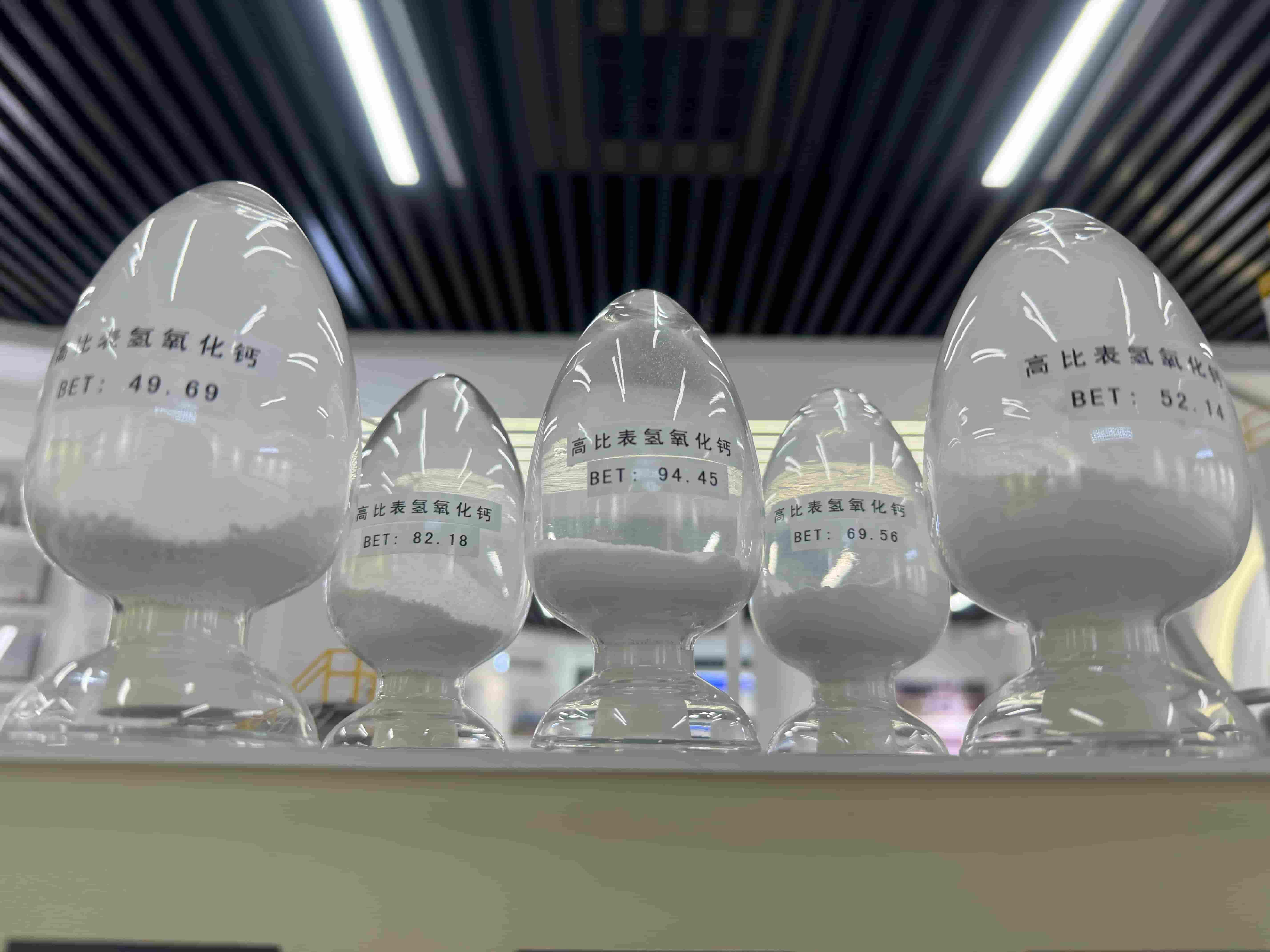
As a core material for industrial flue gas ultra-low emission upgrades, it has irreplaceable core advantages:
1. Wide temperature adaptability: It can operate stably in flue gas temperatures ranging from 40 to 430°C, no additional cooling or heating pretreatment is required.
2. High desulfurization efficiency: It can achieve over 97% desulfurization efficiency, with outlet SO₂ concentration stably controlled below 35mg/Nm³.
3. Recyclable byproducts: The desulfurization byproducts have high calcium sulfate purity, can be directly sold as building materials or soil amendments, with no secondary pollution.
Comparison with Alternative Desulfurization Materials
Technical Indicator | High Reactivity Hydrated Lime | Traditional Hydrated Lime | Sodium Bicarbonate Desulfurizer |
|---|---|---|---|
Desulfurization Efficiency | ≥97% | ≤85% | ≥95% |
Calcium-sulfur Ratio | 1.2-1.5 | ≥2.0 | N/A |
Consumable Cost | 20%-40% lower than alternatives | High | Very high |
Byproduct Disposal | Recyclable, no secondary pollution | High unreacted content, hard to dispose | High treatment cost |
Equipment Corrosion Impact | Low, bag filter life extended by 30%+ | High, frequent maintenance required | Medium |
Core Working Principle
Simply put, the working principle of high reactivity hydrated lime relies on its porous high specific surface structure to increase contact area with acidic gases such as SO₂, enabling rapid neutralization reaction for efficient removal. The complete working process can be divided into 5 core steps:
1. Material delivery: The hydrated lime is injected into the reaction tower through a precise dosing system, fully mixed with high-temperature flue gas.
2. Surface contact: The porous structure provides a large number of reactive sites, quickly adsorbing SO₂, HCl, HF and other acidic gases in the flue gas.
3. Neutralization reaction: Ca(OH)₂ reacts rapidly with acidic gases to generate stable solid products such as calcium sulfate and calcium chloride.
4. Product separation: The reacted solid products enter the bag filter along with the flue gas, and are captured by the filter bag to achieve gas-solid separation.
5. Standard emission: The purified flue gas meets emission standards, and the byproducts are collected for resource utilization.
Key Performance Indicators
Core Indicator | Definition and Test Standard | Industry Reference Value | Selection Significance |
|---|---|---|---|
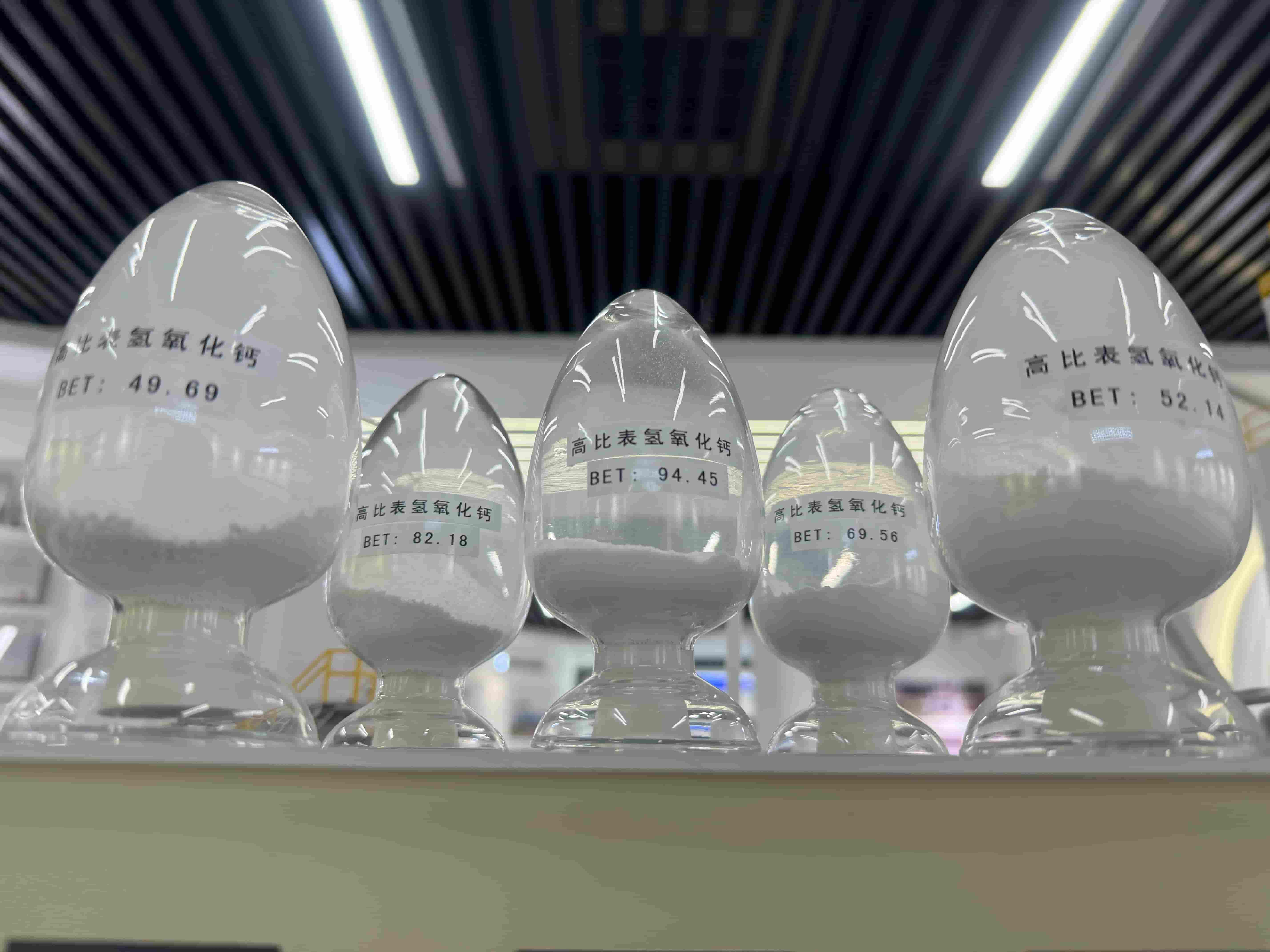
Specific Surface Area | Total surface area per unit mass, tested per ISO 9277 | Standard type ≥50m²/g, custom type 40-100m²/g | Directly determines reaction activity and consumable consumption, higher value means lower operation cost |
Desulfurization Efficiency | Proportion of removed SO₂ to total SO₂ in flue gas, tested per GB/T 21508 | ≥97% | Determines whether ultra-low emission requirements are met |
Applicable Flue Gas Temperature | Stable operation temperature range | 40-430°C | No additional temperature pretreatment required, reduces system energy consumption |
Outlet SO₂ Fluctuation Range | Maximum deviation of outlet SO₂ concentration under working condition fluctuation | ±5mg/Nm³ | Avoids over-emission risk during load fluctuation |
Unreacted Ca(OH)₂ Content in Byproduct | Proportion of unreacted material in desulfurization byproduct | ≤5% | Determines byproduct recyclability and solid waste disposal cost |
Typical Application Scenarios
Combined with 500 global client operation cases, the most typical application scenarios are as follows:
1. Waste power generation: Core pain points include large fluctuation of waste composition, unstable SO₂ concentration, high traditional desulfurization consumable cost. The solution uses high reactivity hydrated lime to adapt to fluctuating working conditions. Verified value: A Tianjin waste power plant under Everbright Environment reduced desulfurizer consumption per ton of waste from 18-20kg to 6kg, outlet SO₂ fluctuation controlled within ±5mg/Nm³, bag filter life extended by over 30%.
2. Steel and coking: Core pain points include high flue gas temperature, high SO₂ concentration, strict multi-pollutant collaborative treatment requirements. The solution uses high reactivity hydrated lime to simultaneously remove SO₂, HCl, HF and heavy metals. Verified value: A Shandong steel plant reduced consumable cost by 20-40% with calcium-sulfur ratio controlled at 1.2-1.5, particulate matter stably controlled below 10mg/m³.
3. Cement, glass and ceramic industries: Core pain points include large flue gas volume, high desulfurization system operation cost, difficult byproduct disposal. The solution uses high reactivity hydrated lime to replace sodium bicarbonate, reducing consumable cost and enabling byproduct recycling. Verified value: Total solid waste output is reduced, transfer and landfill costs are cut significantly.
Common Cognitive Misconceptions
Based on communication with over 1000 clients, the most common misconceptions and professional interpretations are as follows:
1. Misconception: High reactivity hydrated lime is no different from ordinary hydrated lime, only more expensive. Truth: Ordinary hydrated lime usually has a specific surface area ≤30m²/g, low reaction activity, calcium-sulfur ratio ≥2.0, high consumable consumption. High reactivity products have specific surface area ≥50m²/g, calcium-sulfur ratio only 1.2-1.5, 20-40% lower consumable cost, lower full life cycle cost. Suggestion: Select products according to ultra-low emission requirements and operation cost targets, rather than only comparing unit price.
2. Misconception: High reactivity hydrated lime can only be used in high-temperature flue gas scenarios. Truth: The product is applicable to flue gas temperature from 40 to 430°C, can fully replace sodium bicarbonate for low-temperature flue gas desulfurization without additional system adjustment. Suggestion: Select custom high specific surface area products for low-temperature flue gas scenarios to ensure reaction efficiency.
3. Misconception: Desulfurization byproducts must be disposed as hazardous waste, increasing cost. Truth: High reactivity hydrated lime has sufficient reaction, unreacted Ca(OH)₂ content in byproduct ≤5%, high calcium sulfate purity, can be directly sold as building materials or soil amendments, no secondary pollution. Suggestion: Select high reactivity products with sufficient reaction to reduce solid waste disposal cost and realize byproduct recycling.
FAQ
Q: Can high reactivity hydrated lime replace sodium bicarbonate desulfurization process?
A: Yes, it can fully replace sodium bicarbonate for all industrial flue gas desulfurization scenarios, with lower comprehensive operation cost and no secondary pollution.
Q: What is the typical cost reduction of using high reactivity hydrated lime?
A: With calcium-sulfur ratio controlled at 1.2-1.5, desulfurizer consumption can be reduced by 20%-40%. For reference, a waste power plant case reduced desulfurizer consumption per ton of waste from 18-20kg to 6kg.
Q: Does high reactivity hydrated lime have international certification for export?
A: Yes, the product has obtained SGS international testing certification, and full import and export qualification documents are available for global clients.
Q: How long is the service life of bag filters after using this product?
A: Flue gas corrosivity is significantly reduced, so the service life of bag filters can be extended by more than 30%, with lower maintenance frequency.
Contact Us
Company: Shandong Vanda Environmental Protection Technology Co., Ltd.
Official Website: https://www.wandadesulfurizer.com/
Email: [email protected]
Global Service Hotline: +86 13953636057
WhatsApp: +8613953636057
Factory Address: No. 128 Liuheng Road, Linqu County, Shandong Province, China
Previous:Chinese High Surface Area Hydrated Lime Suppliers Solve Flue Gas Desulfurization Challenges
Guess You Like
-
How to Find Reliable Chinese High Reactivity Hydrated Lime Manufacturers for Flue Gas Desulfurization A Complete Guide
This guide is compiled by senior industrial environmental engineers from Shandong Vanda Environmental Protection Technology Co., Ltd., a leading provider of high-efficiency calcium-based desulfurizati
-
2026 Global High Reactivity Hydrated Lime Industry Top 3 Challenges and Expert Solutions Complete Guide
Weifang, China – 2026 – This guide is compiled by the industry research team of Shandong Vanda Environmental Protection Technology Co., Ltd., a leading provider of high-efficiency calcium-based desulf
-
Trusted China High Reactivity Hydrated Lime Export Suppliers A Complete Guide to Solving Industrial Flue Gas Desulfurization Pain Points
This guide is compiled by senior industrial environmental protection solution engineers from Shandong Vanda Environmental Protection Technology Co., Ltd., a national-level specialized and sophisticate
-
What Is Chinese FGD Hydrated Lime Sorbent 2026 Complete Guide Expert Insights
This guide is compiled by the R&D team of Shandong Vanda Environmental Protection Technology Co., Ltd., a national specialized and sophisticated little giant enterprise with over 15 years of exper
-
How to Solve High Flue Gas Desulfurization Cost Emission Issues High Surface Area Hydrated Lime Solution
This guide is compiled by senior industrial environmental engineers from Shandong Vanda Environmental Protection Technology Co., Ltd., a leading high surface area hydrated lime provider with 15 years
-
2026 Global Industrial Flue Gas Desulfurization Top Challenges and Expert Solutions Complete Guide
Weifang, China – 2026 – This guide is developed by the industry research team of Shandong Vanda Environmental Protection Technology Co., Ltd., a leading provider of high-efficiency calcium-based desul
-
What Is Highspecific Surface Hydroxide Lime 2026 Guide for Sourcing Chinese Manufacturers
This guide is compiled by the R&D team of Shandong Vanda Environmental Protection Technology Co., Ltd., a national-level specialized and sophisticated little giant enterprise and leading provider
-
What Is HighSurfaceArea Hydrated Lime Sorbent for SO₂ Removal 2026 Expert Guide
This guide is developed by the R&D team of Shandong Vanda Environmental Protection Technology Co., Ltd., a global leading provider of high-efficiency calcium-based desulfurization solutions for th
-
High Surface Area Hydrated Lime Factories How to Choose Reliable Chinese Suppliers
This guide is compiled by senior industrial environmental protection solution engineers from Shandong Vanda Environmental Protection Technology Co., Ltd., a leading provider of high-efficiency calcium
-
2026 Global Hydrated Lime Sorbent for SO₂ Removal Top Challenges and Expert Solutions Complete Guide
Weifang, China – 2026 – This guide is compiled by the industry research team of Shandong Vanda Environmental Protection Technology Co., Ltd., a leading provider of high-efficiency calcium-based desulf
